February Yoga Theme: Ahimsa — A Month Of Non-harming Compassion

Ahimsa: A Month of Non-Harming Compassion

February invites us to slow down, soften our edges, and return to one of yoga’s most foundational teachings: ahimsa, the practice of non-harming. Often translated as compassion or non-violence, ahimsa is not about perfection or passivity. It is about care. It is about choosing responses that reduce harm and increase kindness—toward ourselves, others, and the world we share.

This month at Embracing Spirit Yoga, we explore ahimsa as a living practice—one that unfolds gently, week by week, through awareness, movement, breath, and reflection.

Rather than striving to do more, February asks us to listen more deeply. To notice where we push, judge, or override our needs—and to choose something softer instead.


Week One: Ahimsa with Ourselves

Non-harming begins within. The way we speak to ourselves, interpret our experiences, and meet discomfort sets the tone for everything that follows.

This week’s practices focus on cultivating self-compassion and awareness. We slow down enough to hear our inner dialogue and gently shift the tone from criticism to curiosity. Through mindful movement and breath, we practice meeting ourselves exactly as we are—without fixing, forcing, or comparing.

Reflection: How do I speak to myself when things feel difficult?

Affirmation: May I meet myself with kindness and care.


Week Two: Ahimsa with Our Body

Our bodies carry wisdom, yet many of us have learned to override signals of fatigue, pain, or discomfort in the name of productivity or progress.

This week invites a different relationship—one rooted in listening rather than pushing. Practices emphasize honoring sensation, respecting limits, and moving with awareness instead of force. Ahimsa shows up when we trust the body’s messages and respond with patience rather than judgment.

Reflection: What does my body need from me right now?

Affirmation: I honor my body with gentleness and respect.


Week Three: Ahimsa in Our Relationships

Compassion in relationship does not perhaps surprisingly—mean saying yes to everything or avoiding conflict. True non-harming includes honesty, clarity, and boundaries.

This week we explore how ahimsa lives in connection—with presence, listening, and respectful communication. Practices support staying open-hearted while grounded, especially in moments of emotional charge or disagreement. We practice kindness that includes ourselves.

Reflection: Where might kindness and boundaries coexist in my relationships?

Affirmation: I can be compassionate and clear at the same time.


Week Four: Ahimsa in Our World

In the final week, we widen the lens. Ahimsa extends beyond the mat and into daily choices—how we consume, speak, act, and participate in the collective.

This is not about carrying the weight of the world, but about recognizing the power of small, intentional actions. Steadiness, presence, and care become forms of compassion in motion.

Reflection: What small choice today reflects non-harming?

Affirmation: May my actions reflect care for the world I am part of.


Practicing Ahimsa This Month

You may choose to support this theme with simple rituals—lighting a candle before practice, pausing for a conscious breath before responding, or diffusing a grounding essential oil like cedarwood to remind yourself of connection and community.

Above all, let this month be an invitation rather than an obligation. Ahimsa is practiced one moment at a time.

May February be a time of soft strength, steady compassion, and living with care.

Embracing Spirit Yoga

Essential Oil Blend for Presence: A Grounding Aromatherapy Ritual for Mindful Living

In a world that constantly pulls our attention outward, presence has become both a practice and a refuge. Presence invites us back into our bodies, our breath, and this moment—exactly as it is. Aromatherapy can be a gentle yet powerful ally in this practice.

This essential oil blend for presence was intentionally crafted to support grounding, calm the nervous system, and encourage mindful awareness throughout the day.


Why Use Essential Oils for Presence?

Scent is processed directly through the limbic system—the part of the brain connected to emotion, memory, and regulation. When used with intention, essential oils can:

  • Support nervous system balance
  • Encourage slower, deeper breathing
  • Reduce mental distraction
  • Anchor awareness in the present moment

For those living with chronic pain, recovering from surgery, navigating stress, or practicing mindfulness and yoga, grounding essential oils can serve as an accessible daily ritual.


The Essential Oil Blend for Presence

This blend balances earthy, floral, and citrus notes to create a sense of calm alertness—rooted yet open.

Ingredients & Benefits

Frankincense
Often called the “oil of awareness,” frankincense supports deep breathing, emotional regulation, and spiritual connection.

Lavender
Known for its calming properties, lavender helps quiet the mind and soften physical tension without dulling awareness.

Bergamot
A bright citrus oil that uplifts mood and eases anxious thought patterns, bergamot encourages gentle optimism and clarity.

Cedarwood
Warm and grounding, cedarwood promotes a sense of safety, stability, and embodiment.


Presence Essential Oil Blend Recipe

Roller Blend (10 ml):

  • 3 drops Frankincense
  • 3 drops Lavender
  • 2 drops Bergamot
  • 2 drops Cedarwood
  • Fill with a carrier oil (jojoba or fractionated coconut oil)

Diffuser Option:

  • 2 drops Frankincense
  • 2 drops Lavender
  • 1 drop Bergamot
  • 1 drop Cedarwood

How to Use This Blend for Mindfulness

  • Apply to wrists, heart center, or back of the neck before meditation or yoga
  • Use during breathwork or body awareness practices
  • Diffuse while journaling, resting, or during recovery time
  • Pair with a daily affirmation or mindful pause

Mindful Affirmation:
“I am here. I am grounded. This moment is enough.”


A Gentle Daily Ritual for Presence

  1. Apply or diffuse the blend
  2. Close your eyes and inhale slowly through the nose
  3. Exhale fully through the mouth
  4. Name three sensations you can feel right now
  5. Return to your day with softer awareness

This ritual takes less than two minutes and can be repeated whenever you feel scattered or overwhelmed.


Safety Notes

  • Always dilute essential oils before topical use
  • Avoid bergamot before sun exposure unless using a bergaptene-free (FCF) version
  • Consult a qualified professional if pregnant or managing medical conditions

Presence Is a Practice

Presence isn’t about perfection or constant calm. It’s about returning—again and again—to yourself. This essential oil blend is not a solution, but an invitation. A sensory reminder that you are allowed to slow down, breathe, and be here now.

If you enjoy practices that support mindful living, gentle yoga, and healing rituals, explore more resources at Embracing Spirit Yoga.

Mindfulness and Orienting: Using the 5 Senses for Grounding

The Power of Presence: A Guide to Sensory Orienting

In moments of high stress or mental clutter, our thoughts often drift into the future or dwell on the past. This disconnect from the “here and now” can lead to increased anxiety and a feeling of being overwhelmed. Mindfulness offers a solution through a practice known as orienting.

Orienting is the process of scanning your environment and using your physical senses to anchor yourself in the present moment. It is a biological signal to your nervous system that you are safe in your current space.

Why Orienting to the Five Senses Works

The human brain is wired to prioritize sensory input. When you intentionally focus on what you see, hear, or feel, you shift activity from the amygdala (the brain’s emotional center) to the prefrontal cortex (the rational center). This shift helps regulate the nervous system and lowers the heart rate.

The 5-4-3-2-1 Grounding Technique

One of the most effective ways to practice sensory orienting is the 5-4-3-2-1 method. This structured approach ensures you engage every major sensory system to achieve a state of calm.

Observe Five Things You Can See

Begin by looking around your immediate environment. Look for small details you might usually overlook. Notice the way light hits a surface, the texture of a wall, or the specific shade of a nearby object. Labeling these items internally helps solidify your presence in the room.

Acknowledge Four Things You Can Touch

Physical contact is a powerful grounding tool. Notice the sensation of your feet on the floor or the fabric of your clothing against your skin. You might pick up a nearby object to feel its weight, temperature, or roughness. Focus entirely on the tactile feedback your body is receiving.

Identify Three Things You Can Hear

Shift your attention to your auditory environment. Instead of judging the sounds as “noise,” simply identify them. You might hear the distant hum of traffic, the sound of your own breathing, or the ticking of a clock. Listen for sounds both far away and close to you.

Note Two Things You Can Smell

Smell is more directly linked to the brain’s emotional center than any other sense. Take a deep breath and notice any scents in the air. This could be the smell of coffee, fresh rain, or even the neutral scent of the room. If no distinct smells are present, recall a favorite scent and imagine it vividly.

Recognize One Thing You Can Taste

Finally, bring your awareness to your mouth. You might notice the lingering taste of a recent meal or simply the sensation of your tongue against the roof of your mouth. If you have a drink or a small piece of food available, take a mindful sip or bite, focusing entirely on the flavor profile.

Integrating Mindfulness into Daily Life

Orienting does not require a meditation cushion or a silent room. You can practice these steps while walking to your car, sitting in a meeting, or washing dishes. The goal is consistency rather than perfection. By regularly “checking in” with your five senses, you build a resilient nervous system that can more easily navigate the stresses of daily life.

Do Not Let Your Strength Get in the Way

Long ago, while volunteering in hospice—quietly rubbing people’s feet near the end of their lives—I met one of my greatest teachers.

She was almost breathtaking in her vibrancy. An angel in human form, luminous even as her body was preparing to let go. In our brief time together, she offered me a message that has stayed with me for years. One I still return to. One I am still learning.

My Teacher

When I noticed that we shared the same birthday, her eyes flew open with delight. Without missing a beat, she began listing the qualities of a Capricorn: strength, independence, tenacity, hard-working, task-completing, don’t-take-anything-from-anyone attitude—basic bad-ass energy.

We laughed instantly, recognizing ourselves in each other. Our shared stubbornness. Our headstrong resolve.

As I rubbed her feet, she mostly kept her eyes closed, her face soft and peaceful. The room felt calm, sacred. When I finished and began to stand to leave, she suddenly reached out and grabbed my arm.

With unmistakable Capricorn fierceness, she locked eyes with me and said:

“Do not let your strength get in the way.”

The silence that followed was vast. The words hung in the air, echoing long after they were spoken.

Moments later, her beloved partner walked past the bed. My patient gestured toward her and explained, “She’s a Cancer.” Then she turned back to me and said,

“We are Earth dwellers. Sometimes we have to carry the water of others.”
(She nodded gently toward her love.)
“And sometimes, we must allow the water to wash over us.”

Her eyes closed again. A soft smile appeared on her face.

A few moments later, she opened her eyes once more and asked me a question that caught me completely off guard:

“What do you want your kids to know before you die?”

Without hesitation, I told her that I wanted them to know—deep in their bones—that they are loved unconditionally and accepted for exactly who they are.

She smiled and said, “They already know that.”

The room grew quiet again. Still. Tender. As we said goodbye, tears streamed down both of our faces. In less than an hour, I had received more wisdom than I could have ever hoped for. Holding her hand, I thanked her—filled with gratitude.

Once more, she repeated:

“Do not let your strength get in the way.”

The Part I Didn’t Expect

The most startling part of this experience?

That very morning, I had tattooed the word “strength” on my ribs—after asking my boys to each offer one word they associated with me.

Strength.

Perhaps what I have called strength has also been a wall. A protective barrier. A survival strategy born from necessity and resilience.

And maybe—just maybe—while that strength has served me well, it has also gotten in my way.

Because strength, when held too tightly, can block tenderness. Independence can resist receiving. Resilience can forget how to rest. And self-sufficiency can quietly keep love at arm’s length.

As Rumi reminds us:

“Your task is not to seek love, but merely to seek and find all the barriers within yourself that you have built against it.”

I still carry her words with me.
Still practicing.
Still softening.
Still learning how to let the water wash over me.

A Year of Renewal: Reflecting on Change, Courage, and New Beginnings

A Year of Renewal: Reflecting on Change, Courage, and New Beginnings

Every year, I choose a single word that becomes a thread woven through my life—my sankalpa, my heartfelt intention. This year, my word is Renewal, and as I close the door on another chapter, I can clearly see how life has been guiding me toward this exact moment of rediscovery.

2024 was unlike any year I’ve ever lived. It brought deep healing, unexpected shifts, and a powerful invitation to grow in directions I didn’t anticipate. After decades of helping others reconnect to themselves, this was the year life asked me to reconnect to me.

And I said yes.

Letting Go: Stepping Away After 18 Years

One of the biggest shifts—one that still feels surreal—was ending my 18 years of traveling to more than 50 assisted living homes. For nearly two decades, I poured my heart into teaching adaptive yoga, holding space for elders, and building community through mindful movement.

It was sacred work.
Beautiful work.
Exhausting work.

And it was time.

Pulling back to only a small handful of homes wasn’t just a schedule change. It was a soul-level shift. It was an act of honoring my body, my healing, and the next evolution of my service. For the first time in years, I allowed myself to loosen the grip on what I had always done and create space for what could be possible next.

A New Path: Becoming a Qualified Behavioral Health Assistant

This year also brought a huge professional pivot—one that aligned not only with my gifts but with my capacity.
I stepped into my new role as a Qualified Behavioral Health Assistant, helping people recover from trauma through skills, connection, and compassionate support.

This work is meaningful in a different way.
It requires less physical demand, but a deeper emotional presence.
It allows me to live my values without compromising my wellness.
And most of all, it lets me continue serving others in a way that honors my own healing journey.

Sometimes renewal doesn’t look like starting over.
Sometimes it looks like redirecting your wisdom where it can thrive.

Welcoming Rosie: Joy Arrives on Four Paws

Another bright spot this year?
I got a new puppy — sweet Rosie.

She arrived exactly when I needed a spark of uncomplicated joy, and she brought just that.
There is something magical about how animals help us stay present, soften our hearts, and remember to play. Rosie has been a daily reminder that renewal can show up in wagging tails, muddy paw prints, and early-morning snuggles.

She is a gift of pure delight.

The Big One: I Wrote My Book

And then there’s the part that still makes me say, “Did I really do that?”

I wrote my book.

After years of teaching, thousands of classes, countless conversations, and decades of lived experience… something inside me said now.
The words poured out—not from obligation, but from an inner knowing that it was time.

This book is the culmination of everything I’ve lived, learned, healed, and held.
It is a tapestry of wisdom and wellness, a snapshot of my heart in this season of life.
It is my offering.
My renewal.
My beginning again.

Writing it stretched me, surprised me, and awakened parts of my creativity that had been sleeping under the weight of survival mode. More than anything, it reminded me of my purpose—and my voice.

As I Step Into 2025

Renewal is not a return to who I used to be.
It’s an unfolding.
A softening.
A reclaiming.

This year brought endings, beginnings, and a lot of gentle in-between moments.
It taught me that clarity often arrives only after the letting go.
That healing isn’t linear.
That courage can be quiet.
And that renewal is a choice we make every single day.

As I step into 2025, I do so with gratitude, openness, trust and renewal.

My sankalpa of Renewal has been eye-opening and just rich. What is next? Stay tuned as I reveal my word for 2026! It is going to be a good one!

Breaking the Cycle: How Repeated Complaining Drains Us — and How Repeated Gratitude Heals

We’ve all been there—caught in the loop of saying the same frustrating things over and over. The stress, the pain, the overwhelm, the “why me?” moments. Repetitive complaining is surprisingly natural… and surprisingly draining. It doesn’t make us bad or ungrateful; it just means we’re human.

But here’s the truth I’ve learned through mindfulness, yoga, and healing:
What we repeat becomes what we reinforce.

And while complaining might feel like release, gratitude is what creates actual relief.


Why We Fall Into Repetitive Complaining

When something is hard — your body hurts, life feels heavy, you’re tired, or you’re juggling more than anyone realizes — the mind wants to loop. It’s trying to make sense of discomfort. But when we repeat the same story too often, it keeps us stuck in the same emotional place.

Repetitive complaining can…

  • increase stress hormones
  • shrink our perspective
  • drain our energy
  • make challenges feel bigger than they really are
  • prevent healing (emotionally and physically)

The hard moments deserve acknowledgment — absolutely. But they don’t deserve ownership over your entire inner world.


The Shift: Replacing Repetition With Intention

Instead of repeating the pain, we can repeat the gratitude.

Not the toxic positivity kind.
Not the “pretend everything’s fine” kind.

But the grounded, honest, heart-centered gratitude that reminds us:

There is still some good here.
There is still something working.
There is still something steady beneath the struggle.

This shift isn’t about silencing your pain — it’s about changing the soundtrack of your inner world.


Why Repeated Gratitude Works

Practicing gratitude repeatedly — especially in small, simple ways — can:

  • soften emotional tension
  • support nervous system regulation
  • expand your perspective
  • create new thought pathways
  • bring your attention back to what is supporting you
  • help you feel less alone
  • anchor you in hope, even during hard seasons

It’s the repetition that matters.
Just like complaining reinforces stress…
gratitude reinforces resilience.


A Simple Daily Practice to Try

If you catch yourself repeating a complaint (it happens!), try this gentle shift:

  1. Pause.
    Notice the loop without shame.
  2. Acknowledge the truth.
    “This is really hard right now.”
  3. Add one small gratitude.
    Just one.
    “And I’m grateful I’m learning to take better care of myself.”
    “I’m grateful for the support I do have.”
    “I’m grateful for the strength I didn’t even know I had.”
  4. Repeat the gratitude instead of the complaint.
    This is where your healing gains momentum.

A Repeated Gratitude Mantra to Use All Week

“Even in the hard moments, there is something supporting me. I choose to notice that.”

Say it as many times as you need.
Let it become your new repetition.
Let it anchor you back into compassion — especially compassion for yourself.


Closing Reflection

We all slip into repeating our pain. But with awareness and intention, we can choose a new pattern — one that restores instead of drains, one that lifts instead of weighs down.

A life rooted in gratitude doesn’t ignore the hard things.
It simply refuses to let them be the only things.

Nervous System Support: My Essential Oil Blend for Calming Chronic Fight-or-Flight

Finding Calm When Your Nervous System Won’t Settle

A Personal Blend for When You’re Stuck in Fight or Flight

If you’ve ever lived in a season where your nervous system feels like it has one setting — high alert — you’re not alone. After months or years of stress, pain, recovery, or constant caregiving, the body can forget how to step out of survival mode. You might feel jumpy, restless, easily overwhelmed, or like your mind won’t quiet down even when your body is exhausted.

This state is often called chronic fight-or-flight, and it’s something many of us quietly struggle with. When the body stays “on” for too long, even small tasks can feel heavy. And yet, the moment you begin supporting your nervous system with intention — breath by breath, choice by choice — small shifts begin to happen.

As many of you know, this has been my personal reality. My body has been through an intense year. Surgeries, recovery, pain, stress, and the emotional heaviness of trying to keep up with daily life have kept my nervous system running at full speed. Some days it feels like it never gets the memo that it’s allowed to rest.

But healing happens in layers.
And one of the most supportive tools I’ve leaned on is essential oils.

Why Essential Oils Can Support the Nervous System

Certain essential oils interact with the limbic system — the emotional center of the brain — helping signal the body to soften, release, and shift into the parasympathetic nervous system. They don’t “fix” stress, but they help create an internal environment where your body can breathe again.

Over the years, I’ve crafted many blends, but this one is deeply personal — something I’ve been using daily as I navigate this season.

My Nervous System Support Blend — “Safe in My Body”

This blend is steadying, warm, grounding, and soothing without being sedating. It’s made to help ease tension, soften the stress response, and bring you back to a place of inner safety.

Essential Oils:

  • Copaiba – 4 drops
  • Lavender – 3 drops
  • Frankincense – 3 drops
  • Bergamot – 2 drops
  • Cedarwood – 2 drops
  • Vetiver – 2 drops
  • Patchouli – 2 drops

Add these oils to a 10 mL roller bottle and fill the rest with fractionated coconut oil or jojoba.

How To Use It

Roll it over your heart when I wake up feeling tight or anxious.
Use it on the wrists when you feel overwhelmed or overstimulated.
Apply it to the spine to help ground your energy.
When the breath gets short, pause, inhale the blend, and let the exhale be longer than the inhale — a simple way to signal safety to the nervous system.

A Gentle Reminder

Healing your nervous system isn’t about perfection. It’s about creating moments where your body feels held.
If you’re living in survival mode, please know:
You’re not broken.
Your body is protecting you the best way it knows how.
And with time, breath, support, and compassion, it can learn to soften again.

Affirmation

“I am safe in this moment. My breath is my anchor. My body remembers how to calm.”

The Power of Authenticity: Staying True to Yourself in a World of Comparison

We live in a world that constantly invites us to compare — our bodies, our homes, our achievements, our happiness. The quiet scroll through social media can easily become a spiral of self-doubt, leaving us wondering if we measure up or if we’re enough.

But here’s the truth: you are not meant to be a copy of anyone else. The beauty of your life lies in the uniqueness of your story — your rhythms, your seasons, your way of seeing and being in the world.

Authenticity Over Approval

At our core, we all crave acceptance. It’s part of our human design — to be seen, to belong, to be loved. Yet, the line between being accepted and abandoning our authenticity can blur easily. We start shaping ourselves to fit expectations, dimming what makes us different in hopes of being liked or understood.

Authenticity asks something much deeper of us. It asks for courage. The courage to stand in our truth even when it feels uncomfortable or uncertain. It’s the willingness to show up — imperfectly, honestly, and wholly — and to trust that who we are is already enough.

Balancing Belonging and Being Real

Being authentic doesn’t mean rejecting connection or community. It means participating fully as yourself. It’s the sweet balance between honoring your truth and allowing others to honor theirs.

When we practice mindfulness, we learn to witness comparison as it arises — not with judgment, but with compassion. We can acknowledge the part of us that longs to belong, and gently remind it: belonging built on pretending isn’t belonging at all.

True connection comes when we bring our full selves to the table — our stories, scars, and quirks included.

Mindful Reflection: Coming Home to You

Take a quiet moment today to reflect:

  • When do you feel most like yourself?
  • Where in your life are you trying to fit in rather than be real?
  • What would authenticity look like — even in small ways — this week?

Allow your answers to guide you toward alignment.

The Freedom of Being You

When we stop comparing and start embracing, life softens. The noise quiets. We begin to live with more ease, purpose, and joy.

Authenticity doesn’t require us to be perfect — it simply invites us to be present and honest. And that is where peace truly lives.

Authenticity as a Yoga Practice

Yoga teaches us to return to our breath, to our bodies, and to the truth of the present moment. On the mat, there is no need to perform — only to feel and listen. Each breath becomes an invitation to come home to ourselves, just as we are.

When we carry that awareness off the mat, authenticity becomes a way of living — a mindful practice of choosing truth over image, compassion over comparison, and alignment over approval.

So, as you move through this season, may you permit yourself to be beautifully, unapologetically you. That is the most authentic gift you can give — to yourself and to the world.

The Beauty of Homemade Gifts: Simple Ways to Share Love and Meaning This Season

The holidays often bring pressure to buy more, spend more, and fill our carts with things that don’t always hold lasting meaning. Yet some of the most cherished gifts are the ones made by hand — crafted with time, thought, and love.

It’s time to normalize the beauty of homemade gifts. Not because they’re cheaper or easier, but because they hold something money can’t buy: presence and intention.

The Heart Behind Homemade

When we take the time to make something for someone, we infuse it with care. It’s a quiet way of saying, “You matter.” Whether it’s a loaf of bread, a handwritten note, or a jar of bath salts, each handmade offering carries a little piece of your heart.

Homemade gifts remind us that love doesn’t come from the store — it comes from our hands, our creativity, and our willingness to give meaningfully. Neighbors, teachers, friends, and family can all enjoy timeless gifts that are made from the heart.

Simple Homemade Gift Ideas

Here are a few thoughtful, easy ideas that invite creativity and connection:

1. Essential Oil Blends or Sprays
Mix your favorite oils into a simple roller blend or room spray. Try combinations like wild orange and clove for comfort, or lavender and frankincense for calm. Add a handwritten note with the emotional benefits or a short affirmation.

2. Baked Goods with Intention
Bake a loaf of sourdough, a batch of pumpkin bread, or scones wrapped in parchment and twine. Include a card sharing why you made that recipe — the memories it stirs or the comfort it brings.

3. Cookie Mix in a Jar
Layer dry ingredients for your favorite cookie recipe in a mason jar, then attach a simple tag with baking instructions. Add festive ribbon and a handwritten message like “Made with love and sweet memories.”

4. Homemade Bath Salts or Body Scrubs
Combine Epsom salt, a few drops of essential oils, and dried herbs like lavender or rosemary. Package them in a glass jar with a simple label that reads “for slowing down.”

5. Potpourri Simmer Pot
Create a simmer pot mix with dried citrus slices, cinnamon sticks, and cloves. Add a little note with directions: “Simmer in a pot of water to fill your home with cozy holiday scents.”

6. Gratitude Jars or Affirmation Cards
Write uplifting notes, affirmations, or reasons you’re grateful for the person. Place them in a small jar tied with ribbon — a daily reminder of how loved they are.

7. Crochet Headband or Scarf
If you love crafting, crochet a simple headband or scarf in cozy winter colors. These handmade accessories are thoughtful, practical, and full of heart.

8. Tea or Spice Blends
Create a signature blend of loose leaf tea or herbal infusions. You can also make custom spice mixes for cooking — a fun and personal gift for food lovers.

Why Homemade Gifts Matter

Homemade gifts invite us to slow down and give from the heart. They encourage mindfulness, creativity, and a return to simplicity.

They remind both giver and receiver that joy doesn’t come from how much we spend, but from how much love we pour into what we give.

When we choose to make something by hand, we choose meaning over material — and that’s the kind of gift that truly lasts long after the holidays have passed.

If you are looking to give some homemade gifts but aren’t crafty I can help. Check out my gift giving guide here!

Gratitude Essential Oil Blend and Ritual | A Heart-Opening Practice for November

Gratitude Essential Oil Blend and Ritual

As the season shifts and November invites us inward, we are reminded of the quiet beauty in gratitude — not as a fleeting thought, but as a feeling that roots deep in the heart. This gratitude essential oil blend and ritual is designed to nurture that feeling, helping you connect to appreciation through scent, breath, and mindful reflection.

The Gratitude Essential Oil Blend

Each oil in this blend carries a distinct emotional resonance, working together to open the heart, ground the body, and awaken joy.

You’ll Need:

  • 3 drops Wild Orange — Brings joy, abundance, and creativity. Wild Orange uplifts the spirit and reminds us that life’s sweetness is found in the present moment.
  • 2 drops Lavender — Offers emotional balance and calm. Lavender soothes the heart, eases tension, and helps release resistance to peace and gratitude.
  • 2 drops Patchouli — Deeply grounding and stabilizing. Patchouli connects us to our body, helping us feel centered and safe enough to open to appreciation.
  • 1 drop Roman Chamomile — Encourages compassion and acceptance. This gentle oil supports emotional release and nurtures inner harmony.
  • Optional: 1 drop Frankincense — Enhances spiritual awareness and inner stillness. Frankincense deepens the connection to gratitude by bringing clarity and sacredness to your practice.

Combine oils in a 10 ml roller bottle and top with fractionated coconut oil (or your preferred carrier oil). Gently roll between your palms to blend.

How to Use Your Gratitude Blend

Apply over your heart, wrists, or temples. Close your eyes and take three slow, intentional breaths. Allow the scent to settle — notice how it shifts your energy, softens your thoughts, and opens you to a quieter sense of thankfulness.

The Gratitude Ritual

  1. Find a comfortable place where you won’t be interrupted.
  2. Roll the blend over your heart space and breathe deeply.
  3. Reflect on three things you are grateful for — one that brings you comfort, one that inspires you, and one that challenges you but helps you grow.
  4. Sit quietly for a few moments, letting gratitude expand through your body.
  5. End with a gentle affirmation, such as “My heart is open to the blessings that surround me.”

You may wish to journal, meditate, or simply rest in the feeling of appreciation that lingers.

Why This Practice Works

Aromatherapy engages the limbic system — the part of the brain that connects scent, memory, and emotion. When paired with mindful awareness, essential oils help anchor gratitude in both body and spirit. Over time, this practice can reframe the mind toward joy and cultivate a more peaceful, appreciative heart.

Suggested Oil Substitutions

Don’t have all the oils on hand? You can still create a powerful blend with similar emotional benefits. Try one of these easy swaps:

  • Wild Orange: Substitute with Bergamot or Tangerine for uplifting energy and emotional brightness.
  • Lavender: Swap for Clary Sage or Geranium to promote calm, balance, and self-compassion.
  • Patchouli: Try Cedarwood or Vetiver for grounding and emotional stability.
  • Roman Chamomile: Use Ylang Ylang or Magnolia for soothing comfort and heart-centered energy.
  • Frankincense: Substitute with Sandalwood or Myrrh for spiritual connection and reflection.

These alternatives will still encourage presence, gratitude, and peace — allowing you to personalize the blend based on what you already love or have available.

A Note of Reflection

Gratitude often lives in the subtle spaces — in the light on your morning coffee, the rhythm of your breath, or the warmth of someone’s kindness. This simple ritual is a way to pause and honor those quiet blessings, allowing your heart to soften and your spirit to expand.

Finding Healing Through Mindfulness: How Rituals, Recovery, and My New Book Can Inspire Your Journey

When Healing Becomes a Path to Sharing

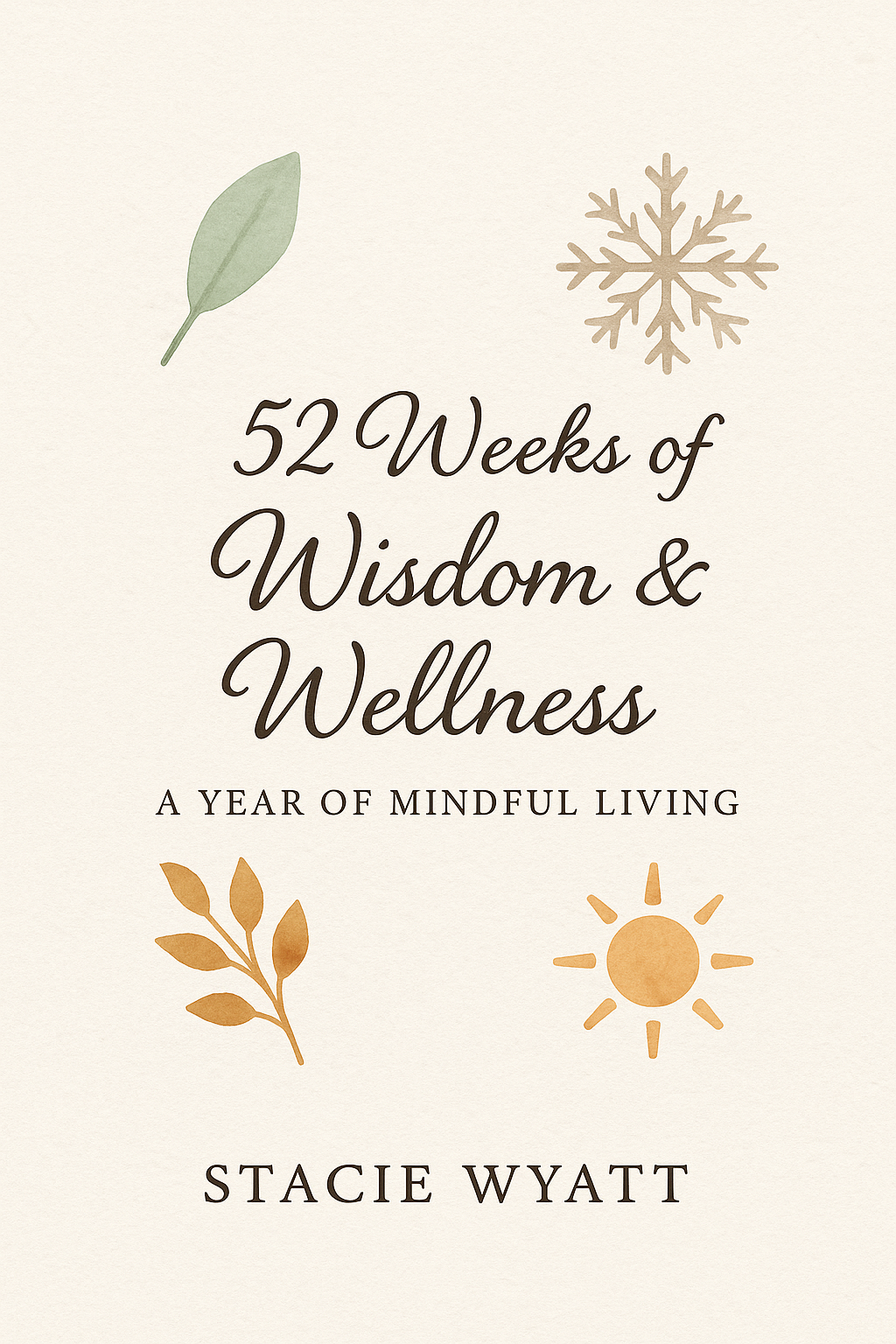
Recovery isn’t just about the body—it’s about the spirit. After enduring three hip surgeries in twelve months, I discovered that mindfulness and ritual were more than coping strategies; they became lifelines. Simple practices like lighting a candle before surgery, whispering affirmations, and pausing to breathe in moments of fear became the anchors that carried me through. These same tools inspired the creation of my new book, 52 Weeks of Wisdom & Wellness: A Year of Mindful Living—a guide to resilience, presence, and the healing power of mindful rituals.

Resilience and Mindfulness

Three hip surgeries in twelve months. I can still feel the weight of those words even as I type them. The body has an incredible way of holding pain, but the spirit has an even more incredible way of seeking healing.

For me, mindfulness and ritual weren’t just practices during that season—they became lifelines. Lighting a candle before each appointment, whispering affirmations before anesthesia, pausing to breathe when fear crept in. These small, sacred moments of presence carried me through what felt impossible.

Finding Peace During Recovery

In the stillness between surgeries, I began to notice something profound: these tools weren’t just keeping me afloat. They were medicine for my mind, my spirit, and my heart. And they were too powerful to keep to myself. What began as survival slowly transformed into teaching, writing, and, ultimately, the creation of my book.

My new release, 52 Weeks of Wisdom & Wellness: A Year of Mindful Living, was born from these very moments of surrender and strength. Each page carries with it the lessons I leaned on—rituals that steadied me, affirmations that lifted me, and reflections that reminded me that healing is not only possible, but inevitable when we walk gently with ourselves.

This book isn’t simply a collection of words—it’s an offering of resilience, hope, and the quiet but profound healing power of mindful living.

May these practices meet you where you are and carry you, as they did me. If you’re navigating a hard season, I invite you to open its pages and find your own anchor.

Order your copy here!

Embracing Change: Finding Strength in the Seasons of Life

Embracing Change: Finding Strength in the Seasons of Life

The Truth About Change

This time of year, we often hear about the importance of embracing change and letting go. It sounds beautiful and effortless, doesn’t it? But one of my greatest teachers once reminded me: not all change can be embraced, and sometimes change is painfully hard.

So true, right?

Even when we can’t welcome change with open arms, we can lean into the process. In doing so, we often discover a deeper strength within ourselves. Change—no matter how uncomfortable—has a way of clearing space, making room for something new to enter our lives.

Listening to the Pull of a New Season

As the seasons shift, I’ve been feeling the tug of change in my own life. Part of that comes from completing some big projects I’ve poured my heart into. The other part comes from listening more carefully to the interior landscape of my soul—the voice that whispers for alignment, truth, and authenticity.

The Universe has been sending gentle reminders, asking me to pause, look, and learn. Maybe even to slow down a little and refuel. My hope is that with a lighter heart and more space inside, I’ll shine more brightly in the ways that matter most. Isn’t that what we’re all here to do?

New Roles, New Paths

Many of you know me as a yoga and mindfulness teacher, a role I’ve cherished for the past 18 years, especially working with adults in assisted living and brain injury programs. That work will always be at the center of who I am.

But I’m also thrilled to share that I’ve stepped into an additional role as a Qualified Behavioral Health Assistant (QBHA). This allows me to support individuals in new and meaningful ways—through advocacy, skills training, wellness education, treatment plan support, and group or individual recovery-focused sessions. It feels like a natural extension of my heart’s work.

A Dream Realized: My First Book

Another huge shift has been bringing a dream to life: publishing my very first book!

 52 Weeks of Wisdom & Wellness: A Year of Mindful Living is now available in both Kindle and paperback.

This book is designed as a companion for your mindful living journey, with reflections, practices, and rituals to guide you through the year.

Purchase 52 Weeks of Wisdom & Wellness here


Welcoming the Season of Letting Go

As summer fades and the air turns crisp, many of us feel the bittersweet ache of transition. We dig out warm sweaters, prepare for shorter days, and maybe even grumble at the thought of snow shovels.

But here’s an invitation: allow yourself to feel the disappointment and then open the door to curiosity. What might this new season bring you? What gift could be hidden inside the shift?

For the rest of the month, I encourage you to:
Take in the beauty of the changing leaves
Breathe in the fall air
Let go of something weighing on your heart
Release an old belief that no longer serves you
Shed what doesn’t elevate you

And most importantly, remember: all is well.

Much love,
Stacie